

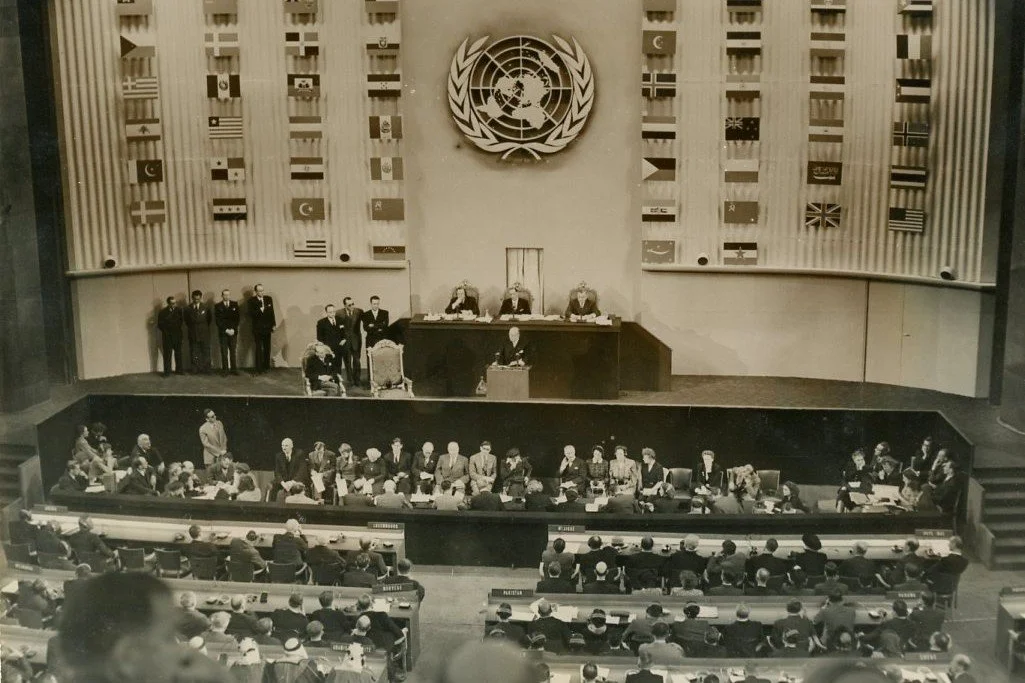
UNSC 1948
The United Nations Security Council meets in the last days of June 1948, and Berlin has just become the first real flashpoint of the Cold War. The Soviet Union has cut off every road, rail line, and canal into the western sectors of the city, stranding more than two million civilians behind a blockade meant to force the Western powers out of Berlin entirely. No shots have been fired, but the stakes could not be higher: the Western Allies must decide, in real time, whether to abandon the city, fight their way in, or attempt something never done before and supply an entire metropolis from the air. Delegates will represent the Council as it grapples with a crisis still unfolding, weighing military risk, humanitarian urgency, and the broader question of how the postwar order in Europe gets decided in its earliest, most fragile years. This is a full crisis committee, with a front room for formal Council debate and a back room where delegates can pursue their own nation's agenda, alliances, and quieter maneuvers away from the table. Delegates should come in knowing not just their country's official line, but how far they are willing to go when the line gets tested.